













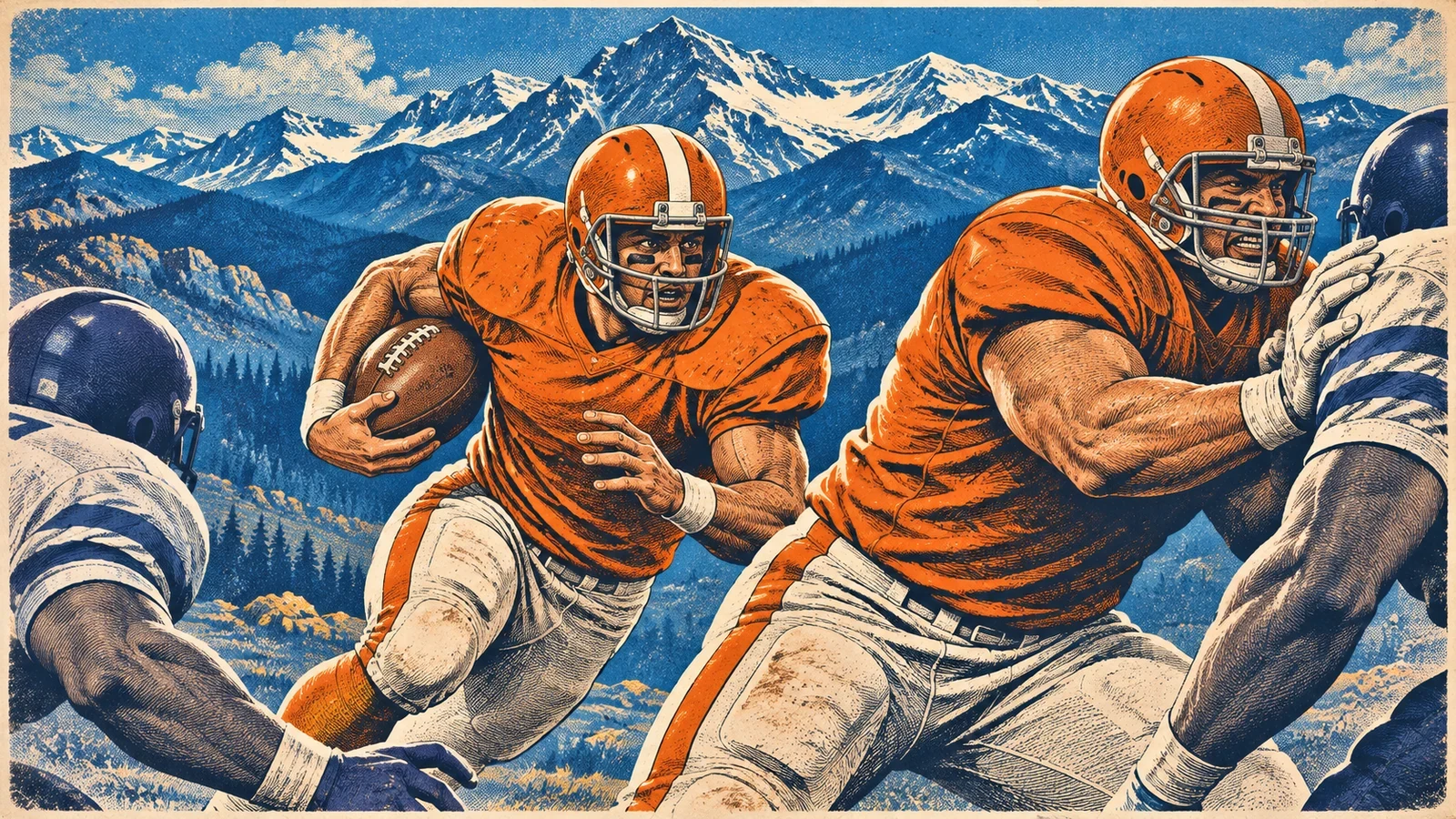

There are two different fourth quarters in Broncos history. In one, Denver trails and John Elway has the length of the field to make something happen. In the other, Denver leads, Terrell Davis gets the ball and the opponent knows exactly which run it must stop. The best Broncos roster can play both games. We rank production and peak in Denver, give defenders the same weight as offensive stars, and ask what each selection permits us to do on the next down.
1. John Elway, quarterback
Elway passed for 51,475 regular-season yards in Denver. His defining quality was the ability to make late throws to the outside even when his first look had disappeared. That mattered during the early Super Bowl runs when the offense depended heavily on him, and it made the play-action threat behind Davis especially costly later.
2. Terrell Davis, running back
The 2,008-yard regular season in 1998 tells only half the story. Davis rushed for 157 yards and three scores in Super Bowl XXXII a season earlier. His uncannily decisive cut once a zone block opened made Denver’s similar-looking runs go to very different places. He is the first Bronco we would draft to protect a seven-point lead.
3. Champ Bailey, cornerback
Bailey let a coordinator spend a safety elsewhere. The sensible opponent often simply threw the other way, which is why interception totals alone undersell a corner’s afternoon. He could hold up in the run game as well. His 2006 season with ten interceptions is the aggressive version we want against a championship quarterback.
4. Von Miller, edge rusher
Two strip-sacks of Cam Newton in Super Bowl 50 illustrate a distinction that matters when Denver’s offense is struggling. A normal sack wins a down. A strip near the goal line can win the field position a defense needs to score or set up a short touchdown. His best games gave Denver that independent route to victory.
5. Shannon Sharpe, tight end
A defense that put a linebacker on Sharpe had to cover a receiver’s routes. Going smaller to solve that problem made Denver’s running game harder to contain. The interaction explains why he fits this lineup so well. His former teammates can recognize the defensive substitution and change the next call without changing personnel.
6. Randy Gradishar, linebacker
The Orange Crush needed a player who could diagnose the run and still find the ball in pass coverage. Gradishar did both in a period when a middle linebacker was too often judged by the size of the collision. We would hand him the huddle and let Miller pick his best rush matchup outside.
7. Steve Atwater, safety
Atwater can fill the alley against a power back without forcing Denver to align him there in advance. That gives the defense another way to disguise its coverage. Pair him with a corner as independent as Bailey and the quarterback must figure out after the snap which half of the field still has safety help.
Peyton Manning’s exceptional counterargument
For a single-season passing project, 2013 Manning and his 55 touchdown passes are a compelling first pick. For a Broncos career, Elway’s 16 seasons outweigh Manning’s four. The roster need not pick between their receivers: pair Rod Smith, who caught 849 passes for Denver, with Demaryius Thomas. Each can turn a short throw into a gain that changes the next call.
An all-time Broncos draft roster
Offensive selections QB John Elway, RB Terrell Davis, WRs Rod Smith and Demaryius Thomas, TE Shannon Sharpe. Start Gary Zimmerman at left tackle and Tom Nalen at center. Manning leads the alternate spread offense.
Defensive selections Von Miller and Karl Mecklenburg threaten the edges. Trevor Pryce supplies interior pressure. Randy Gradishar captains the middle, with Champ Bailey and Louis Wright outside and Steve Atwater deep.
Build a 17-0 team in FSN All-Timers
Follow Denver Broncos coverage on FSN.
Explore all 32 franchise draft boards and FSN’s greatest NFL teams.