













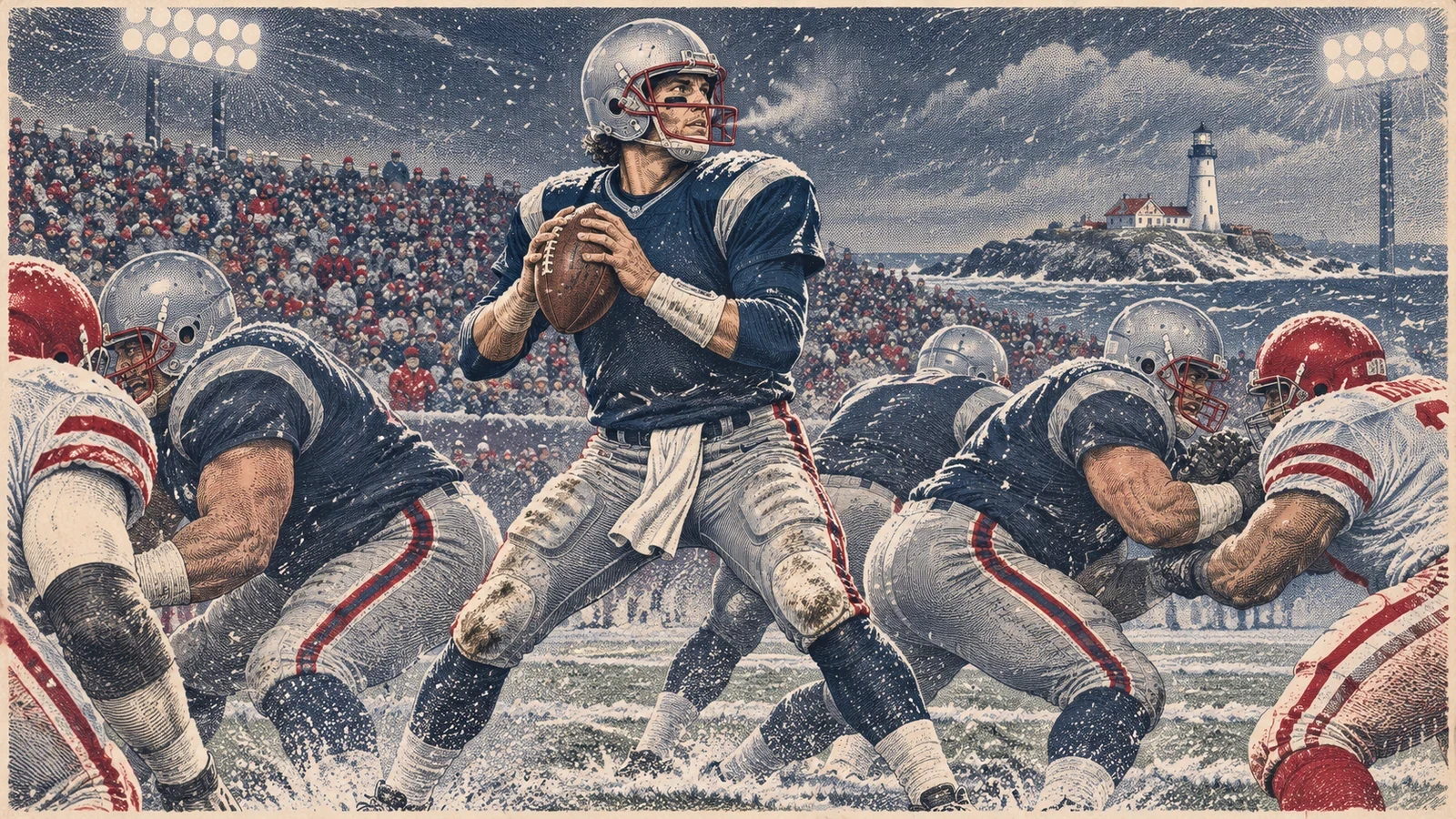
The easiest first pick in this series creates one of the hardest second picks. Once Tom Brady is on the roster, should New England give him the best interior blocker in franchise history, an extraordinary two-way tight end or a defender who can deliver another possession? The dynasty years answer some of that question. The earlier Patriots supply several answers the dynasty itself never had.
1. Tom Brady, quarterback
Count his six New England championships here. Some involved an aggressive spread passing game and others required short throws and a defense willing to dictate the tempo. Brady could find a favorable matchup early, then return to it until the opponent changed its coverage. Give him defenders who disguise the first look in practice and receivers who read it the same way he does.
2. John Hannah, guard
Hannah’s prime preceded the championships, which makes him a useful test of the exercise. He could move a defensive tackle on a straight-ahead run or pull and reach a linebacker in space. Put him inside Brady’s protection and the quarterback can step forward more often. That is a bigger gain than a simple count of rushing yards behind left guard.
3. Rob Gronkowski, tight end
Gronkowski’s receiving makes the highlight reel. His blocking makes the personnel grouping genuinely difficult to defend. New England could align in what looked like a running formation, then send him up the seam against a linebacker who was never meant to cover that much field. He gets the first receiving pick even with Randy Moss available.
4. Andre Tippett, linebacker
Tippett gives the Patriots’ earlier defenses their proper place in a discussion often dominated by January wins after 2001. An offense had to locate him on the edge and decide whether the back should help. That turns an eligible receiver into a blocker before the defense has sent an extra rusher.
5. Mike Haynes, cornerback
Haynes earned his place in New England before winning a championship with the Raiders. He could stay outside with a top receiver, handle returns and give the safety permission to look somewhere else. He is an especially strong fit on a roster otherwise built around changing defensive assignments from opponent to opponent.
6. Ty Law, cornerback
In the AFC championship game after the 2003 season, Law intercepted Peyton Manning three times. He understood how disrupting a route’s timing could turn a sound quarterback read into a throw headed to the wrong landmark. Pair him with Haynes and a coordinator has two excellent reasons to disguise the deep coverage.
7. Richard Seymour, defensive lineman
The first dynasty needed its front to change shapes without changing people. Seymour could line up inside or outside, consume a blocker on a run and still provide pressure on a pass. He earns the last core spot because so much of the defense’s apparent complexity begins with that practical flexibility.
Where Moss, Edelman and the kickers fit
If we were choosing a single New England receiving season, 2007 Randy Moss and his 23 touchdown catches would be the first selection. For an all-time starting lineup we have the luxury of pairing that vertical threat with Gronkowski and a receiver who can separate quickly inside. Choose Julian Edelman for extended postseason evidence or Wes Welker for his regular-season volume. Adam Vinatieri gets the first high-pressure field-goal attempt. We would happily give Stephen Gostkowski the same kick.
An all-time Patriots draft roster
Offensive selections QB Tom Brady, RB Curtis Martin, WRs Randy Moss and Stanley Morgan, TE Rob Gronkowski. LT Bruce Armstrong, LG John Hannah and C Jon Morris form the left side. Add Julian Edelman in the slot.
Defensive selections Richard Seymour and Vince Wilfork occupy the interior, Andre Tippett attacks an edge, and Tedy Bruschi calls the defense. Start Mike Haynes and Ty Law outside, with Devin McCourty and Rodney Harrison at safety.
Build a 17-0 team in FSN All-Timers
Follow New England Patriots coverage on FSN.
Explore all 32 franchise draft boards and FSN’s greatest NFL teams.