
















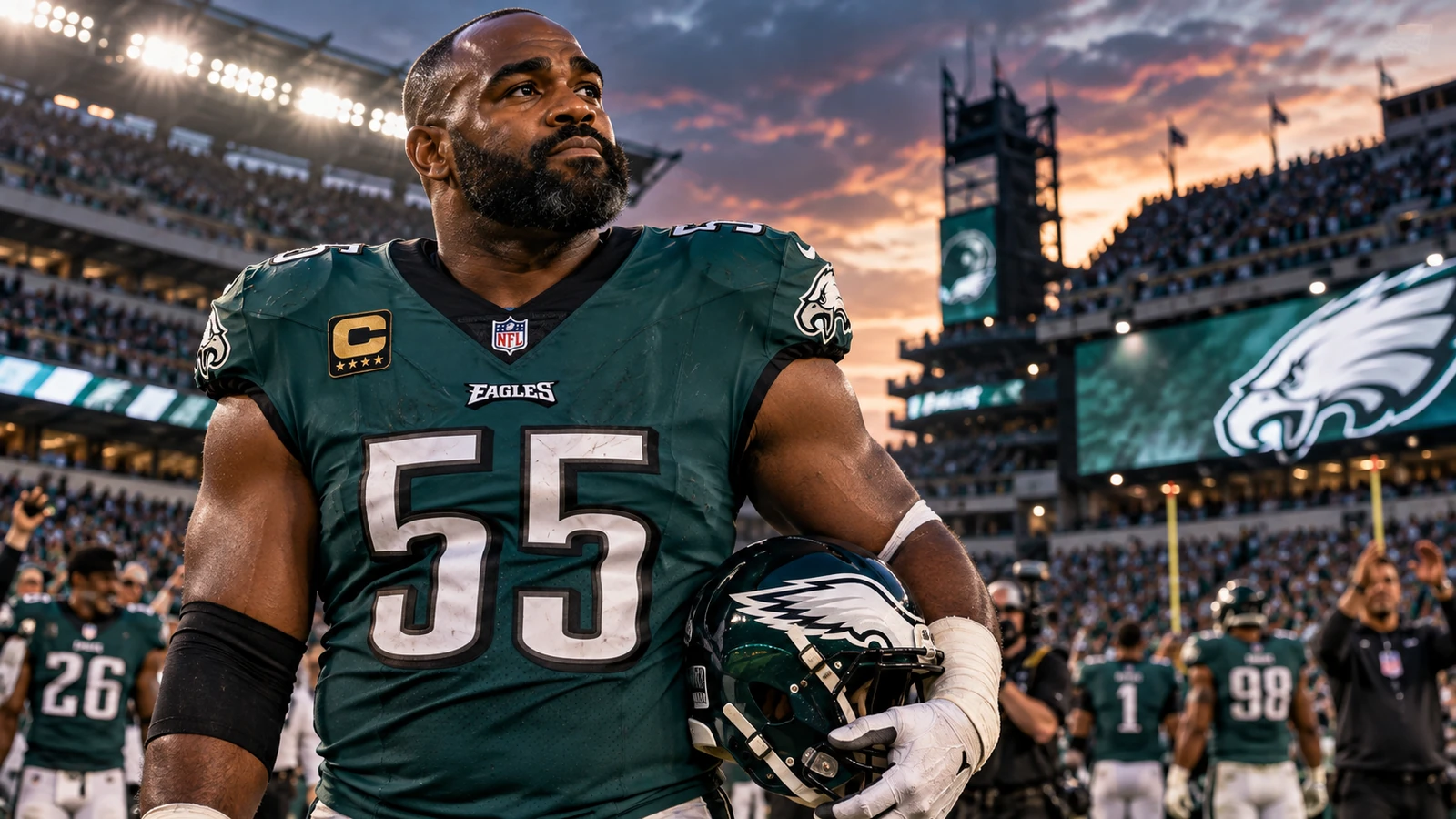

Brandon Graham has closed the door on another comeback. The longtime Philadelphia Eagles defensive end said Tuesday that he is officially done with the NFL, ending a career that stretched across 16 seasons, two Super Bowl championships and more games in an Eagles uniform than any player in franchise history.
The word “officially” matters in Graham’s case because retirement has already been part of his story once. He first retired in March 2025 after helping Philadelphia win Super Bowl LIX, then reversed course last October when the Eagles needed help on the edge. Graham played nine regular-season games in that return and recorded three sacks. He had left open the possibility of a 17th season if the timing and roster situation made sense, but Tuesday’s announcement removes that possibility before the 2026 season begins.
Graham’s second retirement feels more final
Graham’s first retirement had the storybook shape athletes often chase. He had returned from a serious triceps injury to play in a Super Bowl victory, adding another championship to a career that already contained one of the most famous defensive plays in Eagles history. But the competitive pull remained strong enough that he came back when Philadelphia called later that year.
This time, the circumstances are different. Graham had said he was not interested in waiting until midseason to decide again. The Eagles built their 2026 edge rotation with other veteran options, and Graham reached opening week without signing. His announcement allows both sides to move forward without the constant speculation that an injury or losing streak might produce one more reunion.
A career built on staying power
Philadelphia selected Graham in the first round of the 2010 NFL Draft, and his career became an argument for patience. He was not immediately the dominant edge presence some expected from a high pick, and injuries interrupted his early seasons. Instead of becoming a cautionary tale, Graham developed into one of the most dependable players and leaders of the franchise’s modern era.
He finished with 79.5 regular-season sacks and set the Eagles’ franchise record for total games played when the postseason is included. More important than any single counting stat, he remained useful across different coaches, defensive systems and roster generations. That is unusually hard for a defensive lineman whose job is built around collisions and explosion.
The Eagles changed dramatically between Graham’s rookie season and his final snap. He stayed. That longevity is part of why his retirement carries more weight in Philadelphia than the departure of a normal veteran contributor.
The strip-sack that defined a championship
Graham’s signature moment remains his fourth-quarter strip-sack of Tom Brady in Super Bowl LII. Philadelphia had spent most of the night trading scores with New England, and the Eagles needed one defensive play to change the game. Graham beat the protection, knocked the ball loose and helped create the turnover that gave Philadelphia control of the closing minutes.
It is difficult for one snap to summarize a 16-season career, but that one comes close. Graham was never merely a sack-total player. His best football mixed power, timing, effort and the ability to make a high-leverage play when the defense needed one. The Super Bowl strip-sack became the cleanest example because it arrived on the biggest stage in franchise history.
His 2025 return added a different kind of ending
When Graham came back last October, he was no longer being asked to play as if he were in his prime. Philadelphia needed veteran depth, reliable snaps and leadership in a changing edge group. Graham gave the Eagles nine regular-season games and three sacks, extending his career totals while proving he could still contribute after months away from football.
The comeback also made Tuesday’s announcement less about unfinished business. Graham already tested the question every retired star eventually asks: do I still want to do this, and can I still help? He answered yes once. He does not need to keep answering it indefinitely.
What the Eagles do without the possibility of another Graham return
Philadelphia enters 2026 with a reshaped edge room that includes veteran additions Jonathan Greenard, A.J. Epenesa and Arnold Ebiketie. Their presence is one reason the Eagles do not need to keep a roster spot mentally reserved for Graham. The transition was coming eventually; the team has already begun it.
What cannot be replaced as neatly is institutional memory. Graham played for multiple head coaches, through rebuilding seasons and championship seasons, and across several generations of locker-room leadership. Even if he remains around the organization informally, his absence from the active roster removes a player who understood what almost every version of modern Eagles football felt like from the inside.
Graham leaves as an Eagles constant
The retirement should not be judged by whether Graham finished as the same pass rusher he was at his peak. Very few players do. The accomplishment is that he stayed relevant long enough for Philadelphia to experience multiple championship windows with him in the room and on the field.
From first-round uncertainty to Super Bowl hero to franchise elder, Graham’s career kept changing without ever changing teams. That is increasingly rare in the NFL. It also explains why the second retirement feels different from the first: the Eagles are not saying goodbye to a short-term star. They are closing one of the longest chapters in franchise history, while the next phase of the roster will unfold across FSN’s NFL coverage.
Graham’s last comeback means fans learned not to treat the word retirement casually, but Tuesday’s message was deliberately clear. After 16 seasons in Philadelphia, he is officially done. The Eagles will move into 2026 with a new edge rotation, while Graham leaves with two rings, a defining Super Bowl play and a place in the organization’s history that no final sack total can fully describe.