
















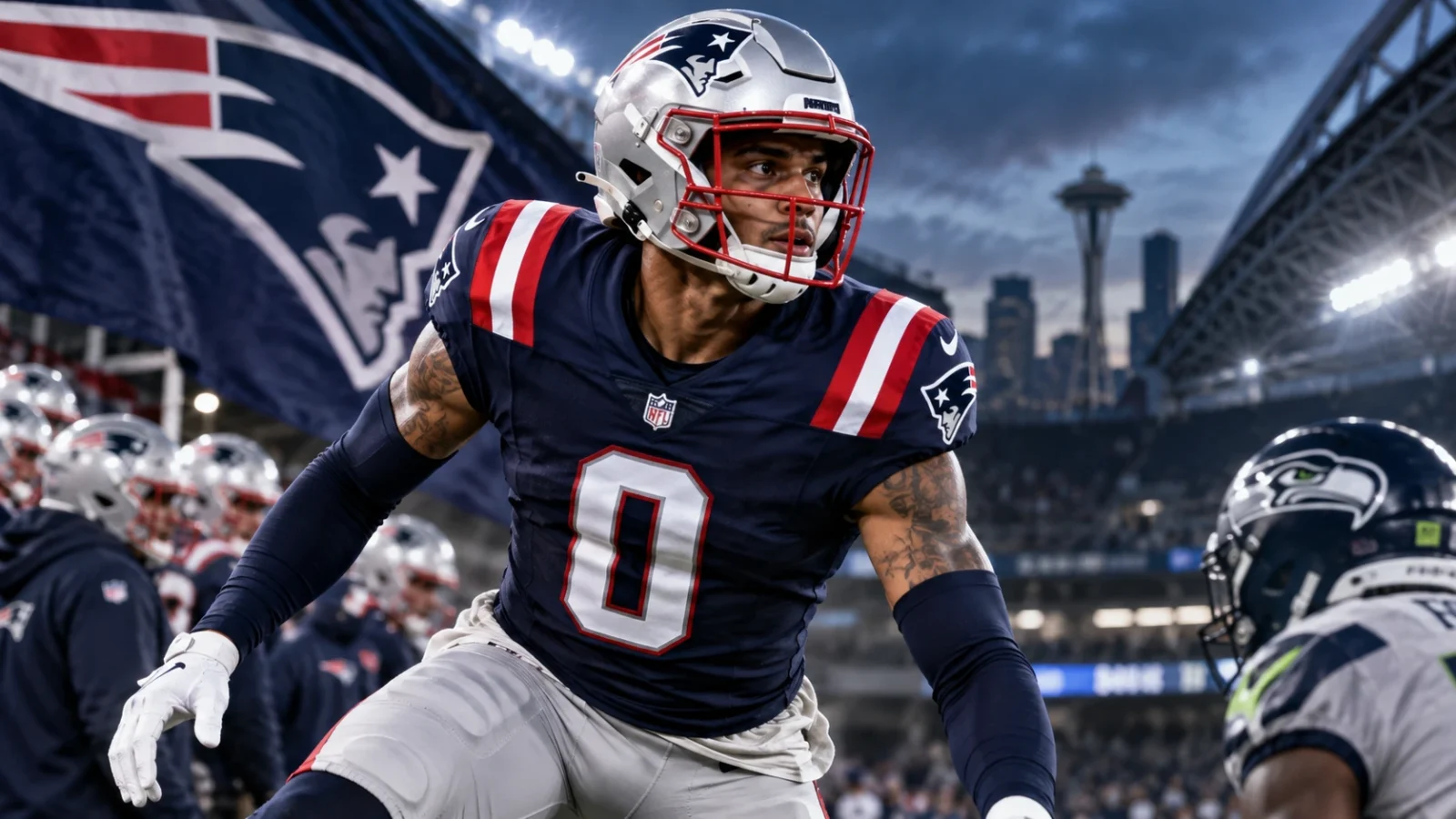

Less than a day after the question around Christian Gonzalez was whether the New England Patriots would finish the deal, the question changed completely. According to the Patriots’ own site, citing multiple reports, New England has agreed to a four-year contract extension with Gonzalez worth $135 million, including $102 million guaranteed, making him the highest-paid cornerback in NFL history.
That development is important on its own, but it is even more notable because of how quickly the conversation flipped. The Patriots had been living with a familiar late-summer tension: a rising star eligible for a first major extension, a market moving upward, and a team balancing urgency against leverage. Now there is a resolution, and it lands just before New England opens the season in Seattle.
That timing matters. It gives the Patriots clarity. It gives Gonzalez security. And it gives Mike Vrabel’s defense a public reminder of exactly what kind of player the organization believes it has: not just a very good young corner, but a foundational defender the franchise was willing to pay at the very top of the market.
What changed from the earlier contract standoff
The most immediate answer is simple: the numbers became strong enough to close the gap, and the Patriots decided getting the deal done before Week 1 mattered more than dragging the negotiation deeper into the season. That is a notable turn from the uncertainty around the situation that had framed the story only days earlier. In a natural way, this article is the follow-up to our earlier coverage of the Patriots and Christian Gonzalez remaining in a contract standoff despite a highest-paid offer. The standoff angle is now obsolete because the central fact has changed: the deal is done.
That is precisely the kind of development that justifies a new article rather than a recycled one. Fans were not merely searching for whether the sides were still talking; they wanted to know whether an agreement had actually been reached and, if so, what it said about the Patriots’ priorities. New England answered both questions in one move.
There is also a subtle message in the size of the contract. The Patriots did not aim for a quiet compromise that would clear the market by a sliver. They went to the top. That matters because top-of-market extensions are not only about paying for past production. They are declarations about projected value, roster hierarchy, and what a team believes it must protect.
Why Gonzalez earned this level of commitment
The Patriots’ case for paying Gonzalez is not difficult to understand. On the official report posted Tuesday morning, Patriots writer Evan Lazar pointed to performance markers that illustrate how rare Gonzalez has already become. In 2025, he reportedly led all qualified corners in catch rate allowed at 43.4 percent and ranked fourth-best in passer rating allowed into his coverage at 57.0. He did that while regularly matching up with top receivers.
Those are not filler statistics. They describe a player who can shape a game plan. A true No. 1 corner changes how defensive coordinators build the rest of the call sheet. He allows more flexibility with safety help, creates more freedom for pressure design, and raises the floor of the coverage structure because the defense does not have to tilt resources away from the rest of the field just to survive one matchup.
Gonzalez has also already built the kind of résumé moments teams remember when extension talks get serious. Lazar’s report highlighted his strong work in key spots last season, including a late interception in the AFC Championship Game and a disciplined coverage performance in Super Bowl LX against Seattle wideout Jaxon Smith-Njigba. That combination of weekly steadiness and season-defining plays is exactly what gets expensive.
Why the timing before Seattle is so significant
The Patriots begin the year with a Super Bowl rematch against the Seahawks, and even if front offices insist contracts do not affect game-week focus, there is obvious value in removing uncertainty before a high-profile opener. Instead of carrying a major negotiation into the season, New England can now let the football conversation take over.
There is also symbolic value in the opponent. Gonzalez just helped the Patriots win a championship run that culminated against Seattle, and now he heads back into a Seahawks week as the highest-paid corner in the league. That does not guarantee anything on Wednesday night, but it does reinforce the image the Patriots want attached to the roster: young, ascending stars being retained rather than rented.
The Patriots’ Week 1 injury report adds another layer of context. Christian Barmore, Ben Brown and TreVeyon Henderson have already appeared on the report, which is a reminder that a roster never enters September in perfect shape. A roster cornerstone becomes even more valuable in that reality. The healthier and more reliable your elite players are, the easier it is to absorb imperfections elsewhere.
What this says about the Patriots’ roster-building plan
The Patriots are not paying Gonzalez in isolation. They are paying him as part of a broader roster thesis. That thesis is straightforward: if Drake Maye is going to lead a long contender window on offense, the team also needs premium young talent on defense that can travel in any matchup and survive any calendar spot. Gonzalez fits that description cleanly.
This is why the extension feels larger than a transaction bulletin. Cornerback is one of the positions where elite play changes not only Sundays but team-building. If you have a true eraser outside, you can be more selective with other resources. You can take different risks in free agency. You can structure the back end more aggressively. You can face elite receivers without treating every week like a damage-control mission.
That idea matters for a Patriots defense that has been built to play hard, physical football. Vrabel’s teams are not usually designed around passive survival. They want flexibility, matchup answers, and a clear identity. Gonzalez provides a large portion of that. Locking him in through his prime years reduces one major future uncertainty from the organization’s list.
What the Patriots bought beyond the coverage snaps
Any extension like this buys talent first, but the best ones also buy predictability. The Patriots now know a premium young defender remains part of their core. That matters in cap planning, draft strategy, and every future conversation about what New England still needs to become even better.
They also bought continuity. Cornerback is not a plug-and-play spot when the assignment is to travel with top receivers and hold up in pressure situations. Teams can spend years searching for that player. Once they find him, the math changes. The price usually feels painful on signing day, but the alternative is often more painful later: losing the player, overpaying a lesser replacement, or entering a window of defensive instability.
New England chose the cleaner outcome. That does not mean every dollar will age perfectly, because no long NFL contract comes with that promise. It does mean the Patriots acted from strength. They identified Gonzalez as a pillar and paid accordingly.
What comes next
The immediate next step is easy to identify: Gonzalez gets ready for Seattle, and the Patriots try to open a new season without the contract cloud hanging overhead. That is a better football setup than the alternative. The larger next step is more interesting. New England now has to keep building around this kind of player. The extension raises expectations because it confirms Gonzalez is not just one excellent young Patriot among many; he is one of the franchise faces.
That is why Tuesday’s news resonates beyond the numbers. The Patriots did not merely settle a negotiation. They clarified the architecture of the team. Gonzalez will be part of it for years, the defense remains built around high-end perimeter talent, and the organization has moved from wondering whether a standoff would linger to celebrating the kind of deal contenders make when they know exactly whom they cannot afford to lose.